Bighorn Sheep In Yellowstone National Park
Bighorn Sheep 6490
$5.00
Description
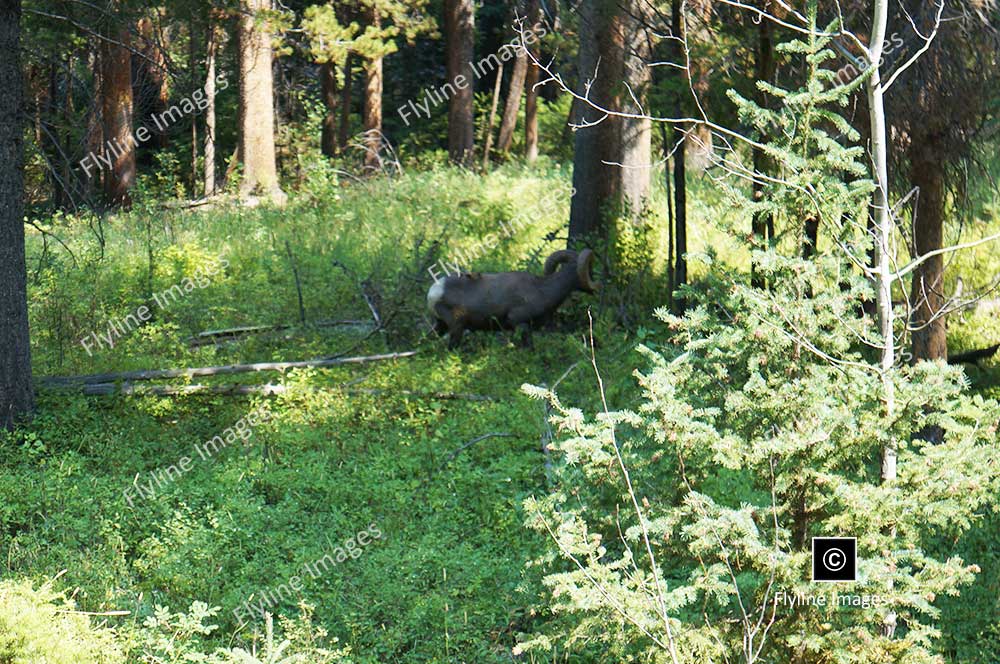
Bighorn Ram
This is a Yellowstone Bighorn Ram. A really challenging creature to photograph in Yellowstone. The heavy, curved horns identify him clearly as a male; ewes (females) have shorter, straighter spikes.
Here is a breakdown of what you are looking at and their status in Yellowstone National Park:
1. The Population
The bighorn sheep in Yellowstone are Rocky Mountain Bighorn Sheep (Ovis canadensis).
Numbers: The population in the park is relatively small compared to other ungulates like elk or bison. Recent estimates suggest there are roughly 100 to 200 bighorn sheep that spend all or part of their time within the park boundaries.
Fragility: The population can fluctuate significantly due to disease. They are particularly susceptible to pneumonia and chlamydia (pinkeye), often transmitted by domestic sheep outside the park.
2. Where and When to Spot Them
Based on the greenery in your photo, this ram was likely in his summer range. Their location changes drastically by season:
Summer (High Country): From June to September, they migrate to higher elevations. The slopes of Mount Washburn and Dunraven Pass are the most reliable places to see them during the warmer months. They are remarkably agile climbers and use steep cliffs to escape predators like wolves and mountain lions.
Winter (Low Country): As the snow deepens, they descend to lower elevations. The best place to view them in late autumn and winter is Gardner Canyon (the cliffs between Mammoth Hot Springs and the North Entrance).
3. “The Rut” (Head Bashing)
The most famous behavior of these animals is the “rut” (mating season), which peaks in November and December.
The Clash: Rams, like the one in your photo, will compete for dominance by rearing up and charging head-first into one another.
The Impact: The collision can be heard from a mile away. They survive this because their skulls have a double-layered bone structure filled with liquid that acts as a shock absorber for the brain.
4. Horns tell the age
You can roughly estimate a ram’s age by the curl of the horns.
Half Curl: Usually 2–3 years old.
Three-Quarter Curl: Usually 4–5 years old.
Full Curl (circle): Usually 7+ years old. The ram in your photo looks to be approaching a full curl, suggesting he is a mature and dominant male, likely over 6 or 7 years old.
MORE ABOUT THE BIGHORN IN YELLOWSTONE
November is the absolute best time for bighorn photography in Yellowstone because the “rut” creates action you won’t see any other time of year. Here is a location-specific guide for capturing the rut.
The Primary Location: Gardner Canyon
The most reliable place in the entire park during November and December is the road between Mammoth Hot Springs and the North Entrance (Gardiner, MT).
Why here? The sheep descend from the high country to these lower elevations for the winter. The steep cliffs along the Gardner River act as a natural stage for their head-bashing battles.
The Shot: You will often see them right next to or even on the road. The canyon walls provide excellent, clean backgrounds that contrast well with the sheep’s dark coats.
Strategy: Drive this 5-mile stretch slowly. Look for “jams” of cars, but also scan the cliffs on the east side of the road. The rams often pose on the ridge lines, allowing for dramatic silhouette shots if the light is right.
The Secondary Location: Yellowstone River Picnic Area
Located on the Northeast Entrance Road, just past Tower Junction.
The Shot: There is a trail here that follows the rim of the canyon. You can often photograph sheep at eye level as they graze along the rim, with the spectacular Calcite Springs canyon drop-off in the background. This offers a much more “wild” environmental context than the roadside shots in Gardner Canyon.
The “Secret” Spot: Miller Butte (Jackson Hole)
While technically south of Yellowstone on the National Elk Refuge (near Jackson), Miller Butte is legendary for bighorn photography in late November/December.
Why go? The sheep here are incredibly habituated to vehicles. They frequently lick salt off the cars. If you want a full-frame portrait of a ram’s curled horn or the texture of his coat without needing a 600mm lens, this is the place.
Photography Tips for the Rut
Listen for the Crack: Often, you will hear the crack of horns colliding before you see it. It sounds like a gunshot. If you hear it, stop and scan immediately.
The “Lip Curl”: Before a fight or mating, a ram will often curl his upper lip back (flehmen response) to taste the air for pheromones. This is a great behavioral shot to capture.
Safety Warning: During the rut, rams are testosterone-fueled and unpredictable. They have been known to charge strange objects, including cars and photographers. Keep a long lens on and give them space, even if they seem calm.
Image & Download Information
When you purchase this photo, you will be granted access to download the image. We have provided 3 image size options, Large 4000 x 2500, Medium 2000 x 1250 and Small 1000 x 625.