
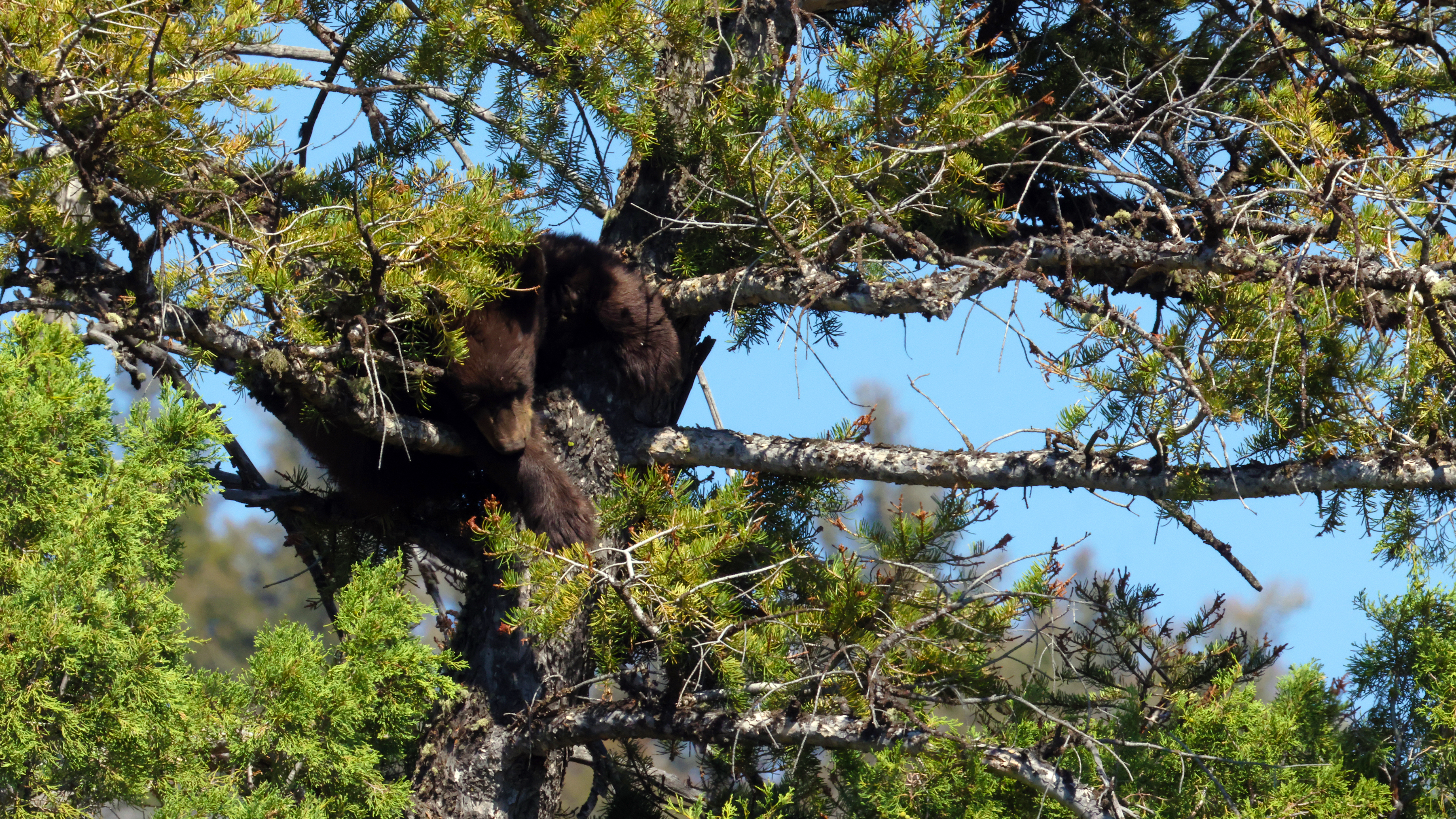
It is a surprisingly common point of confusion for visitors to Yellowstone: you see a brown bear, call it a “Brown Bear” (Grizzly), and then a ranger corrects you. In Yellowstone, color is actually one of the least reliable ways to identify a bear. Here is the breakdown of why they look the way they do and why they spend so much time in the trees.
Black Bear CAN 5773 P
$10.00
Description
Black Bear
It is a surprisingly common point of confusion for visitors to Yellowstone: you see a brown bear, call it a “Brown Bear” (Grizzly), and then a ranger corrects you.
In Yellowstone, color is actually one of the least reliable ways to identify a bear. Here is the breakdown of why they look the way they do and why they spend so much time in the trees.
1. Why are they brown?
In the eastern United States, nearly all black bears are actually black. However, in Yellowstone and the Rocky Mountains, about 50% of black bears are brown, cinnamon, or blonde.
The Genetic Factor: This color variation is caused by a specific genetic mutation (similar to the one that causes albinism in humans) that affects pigment production. It is much more prevalent in western bear populations.
The “Sun & Camouflage” Theory: Scientists believe this lighter color offers a survival advantage in the West.
Camouflage: Eastern bears live in deep, dark, dense forests where black is excellent camouflage. Western bears often forage in open meadows and sagebrush flats. A cinnamon or brown coat blends in much better with the dry grasses and open terrain of Yellowstone than a jet-black coat would.
Heat Stress: Lighter fur may help them regulate their body temperature better under the intense, direct high-altitude sun found in open western landscapes.
2. Why do they love climbing trees?
While Grizzly bears can climb trees (don’t believe the myth that they can’t), they are generally too heavy and their claws are not designed for it. Black bears, on the other hand, are the acrobats of the bear world.
The Physical “How”: Black bears have short, tightly curved, non-retractable claws that act like grappling hooks. (Grizzly claws are long and straight, better for digging roots). Black bears also have massive shoulder strength specifically adapted for pulling themselves up vertical trunks.
The Survival “Why”:
Safety (The #1 Reason): In Yellowstone, black bears share the landscape with a much larger apex predator: the Grizzly. Grizzlies are aggressive and will kill black bears. Because Grizzlies are poor climbers, trees are the black bear’s primary escape route. Sows (mothers) will instinctively send their cubs up a “babysitter tree” while she forages below. If a wolf pack or a Grizzly appears, the cubs are instantly safe.
Food Access: Their climbing ability grants them access to food sources other animals can’t reach, such as whitebark pine seeds (a critical high-calorie food source found at the tops of pines) and bird eggs.
Quick ID Tip (Since color doesn’t work)
Since you can’t rely on the fur color to tell them apart, look for the shoulder hump.
Grizzly: Has a distinct, muscular hump between its shoulders (power for digging).
Black Bear: Has no hump; their rear is often higher than their shoulders when walking.
Image & Download Information
When you purchase this photo, you will receive an email confirmation of your order. That email will summarize your purchase and provide you with the download link to the image you purchased.