
The wild Bactrian camel is actually critically endangered, with only about 1,000 left in the wild in Mongolia and China. Two Humps vs. One: A good way to remember the difference is the letter shape: B for Bactrian (two humps) and D for Dromedary (one hump).
Camel CAN 0880 P
$10.00
Description
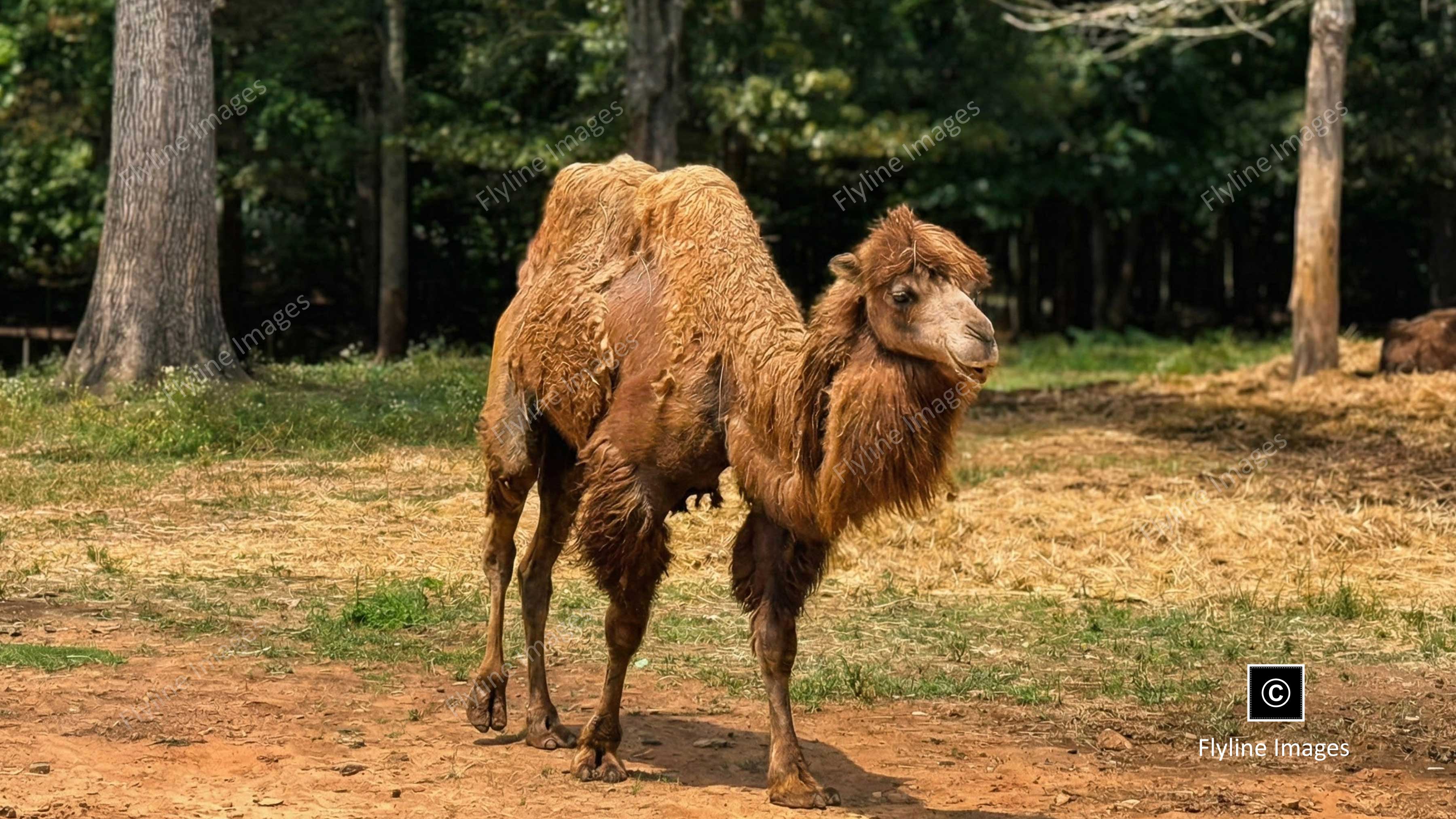
Bactrian Camel
You can easily distinguish them from the more common Dromedary camel because they have two humps instead of one.
Chestatee Wildlife Preserve & Zoo
The “Friendly” Camel: This specific camel is a bit of a local celebrity in Dahlonega. Reviews and visitors frequently mention him as the “super friendly camel” who loves to come right up to the fence to greet people (and often beg for the feed you can buy at the entrance).
The Coat: In your photo, he looks like he has a thick, shaggy coat. This is typical for Bactrians; they grow extremely heavy wool coats to survive the freezing winters of the Gobi Desert and then shed them in big clumps when the weather warms up.
Bactrian Camel Facts
Two Humps vs. One: A good way to remember the difference is the letter shape: B for Bactrian (two humps) and D for Dromedary (one hump).
The Humps aren’t Water: It is a common myth that the humps store water. They actually store fat, which the camel breaks down into energy and water when food is scarce. This allows them to survive for months without food.
Rare in the Wild: While you see them in zoos often, the wild Bactrian camel is actually critically endangered, with only about 1,000 left in the wild in Mongolia and China.
Image & Download Information
When you purchase this photo, you will be granted access to download the image.