
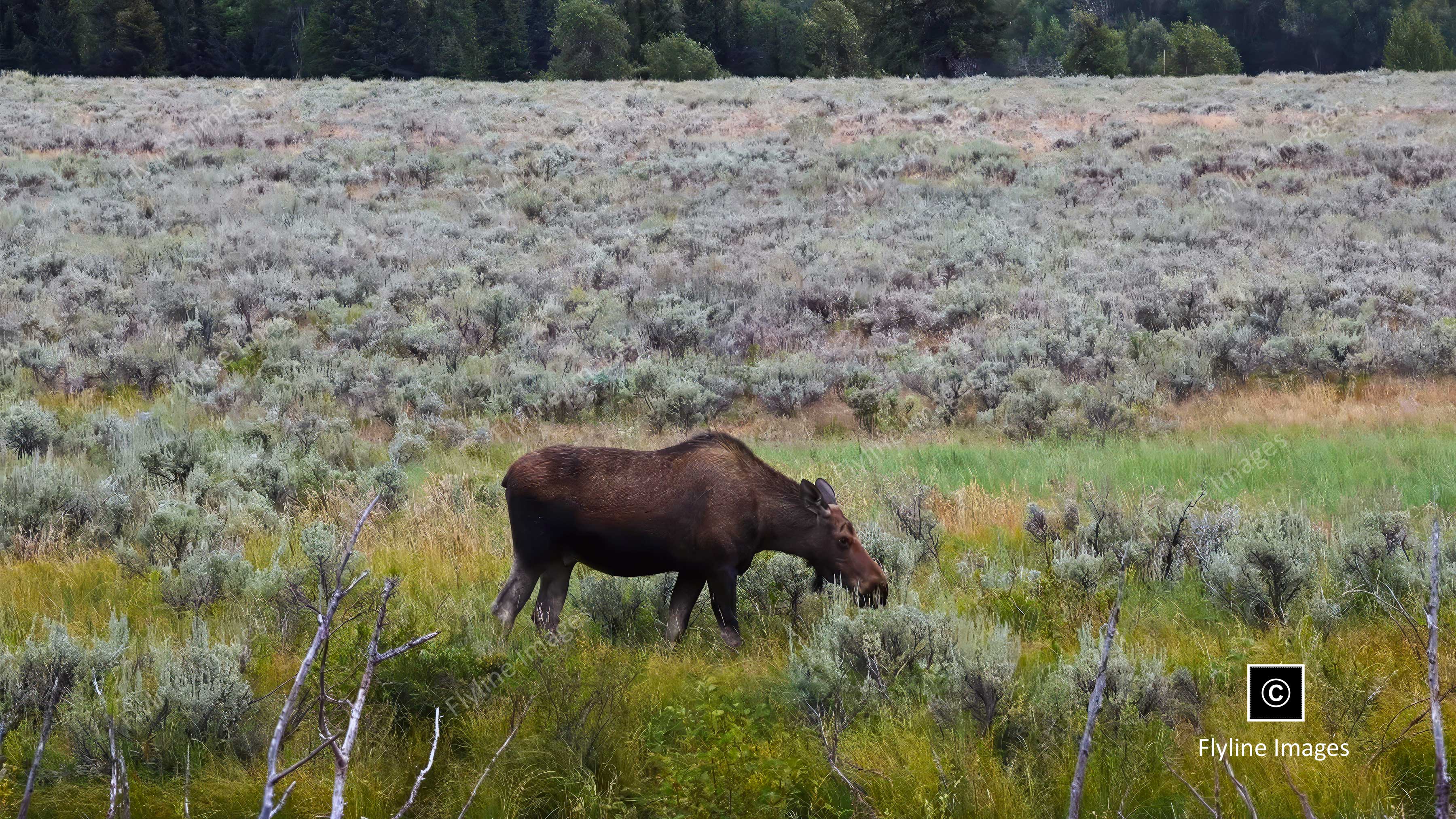
The moose population in Grand Teton National Park is one of the park’s most iconic wildlife features, offering visitors a unique opportunity to observe these majestic creatures in their natural habitat.
Moose CAN 4450 P
$15.00
Description
The Moose-Wilson Road in Grand Teton National Park is arguably the single best corridor in the park—and perhaps the entire Lower 48—for reliable, close-range moose sightings. The dense habitat creates an intimate viewing experience that is quite different from the wide-open sagebrush flats of Antelope Flats or the Gros Ventre.
Here is what you need to know about the moose that frequent this corridor.
1. The Habitat: Why They Are There
The section of the road typically referred to as the “wildlife corridor” is the narrow, winding stretch (roughly 8 miles) between the Granite Canyon Entrance and the town of Moose, WY.
The Food Source: This area is a riparian zone rich in willows and choked with hawthorn and chokecherry bushes. Moose are browsers, not grazers; they eat twigs, leaves, and aquatic vegetation. The roadside ponds and marshes here provide the high-calorie aquatic plants they crave, especially in summer.
The Protection: The dense forest provides cover for cows (females) to hide their calves from predators like grizzlies and wolves. It is very common to see a mother and calf navigating the willows here.
2. The “Famous” Spot: Moose Pond
While you can see them anywhere along the road, the most consistent location is Moose Pond.
Location: Driving north from Teton Village towards Moose, looking for an overlook/pull-out on the right (east) side of the road, roughly 1.5 to 2 miles past the Granite Canyon Entrance.
The Scene: This pond sits below the road level. Moose frequently wade into the water here to feed on vegetation at the bottom. It is one of the classic photo opportunities in the park because the Teton Range (specifically the cathedral group) frames the background perfectly.
3. Best Viewing Strategy
Timing: Dawn and dusk are non-negotiable for the best activity. Moose are crepuscular (active at twilight). Mid-day, they tend to bed down in the deep shade of the thickets to escape the heat.
SEASON
Summer: Great for seeing cows and calves in the water.
Fall (Late Sept/Oct): This is the “rut” (mating season). You are more likely to see large bulls with full racks sparring or chasing cows. The cooler temperatures make them active for longer periods during the day.
4. Critical Etiquette & Safety
The Moose-Wilson Road is incredibly narrow, often lacking a center line or shoulders. This creates unique challenges:
The “Moose Jam”: If a moose is visible, traffic will stop. Rangers often have to direct traffic. Be patient; these jams can last a long time.
Distance: You must maintain a distance of 25 yards (23 meters) from moose.
Warning: Because the vegetation is so thick, a moose can step out onto the road 10 feet in front of you without warning. Drive slowly (the speed limit is low for a reason).
Aggression: Do not mistake their lethargy for tameness. Cows with calves are hyper-aggressive, and bulls during the rut are irritable. If a moose lays its ears back or the hair on its hump stands up, you are too close.
5. Road Logistics
Vehicle Restrictions: RVs and trailers are strictly prohibited on this road due to its narrow width.
Paving: Parts of the road that were historically gravel have recently been paved/improved (as of 2023/2024 construction projects), making the drive smoother but potentially increasing traffic speed—so keep an eye out.
Summary Checklist for Your Trip:
Go Early: Be on the road by 6:30 AM or 7:00 AM.
Go Slow: Keep it under 20 mph to spot movement in the heavy brush.
Look Low: Watch the water line of the ponds for large dark shapes.
Look High: Watch the tall willow thickets for the flash of a majestic antler rack.
Image & Download Information
When you purchase this photo, you will be granted access to download the image.