
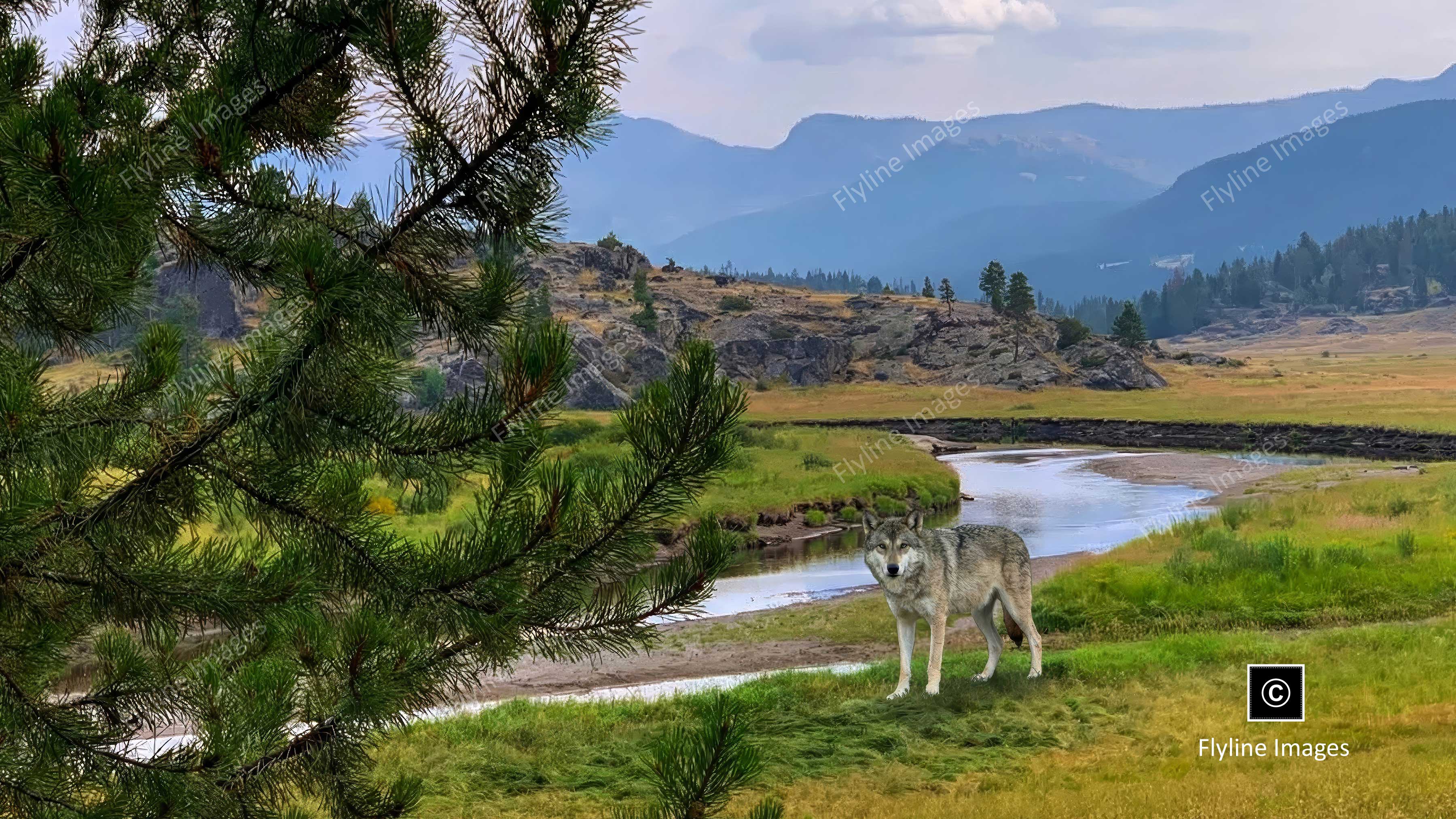
While you might expect the Gray Wolf to be the default, Yellowstone’s wolf population is actually split almost 50/50 between gray and black wolves.
Wolf 10071 P
$15.00
Description
Creative by Flyline Images
You are looking at a Gray Wolf. The wolf is in an area near the Slough Creek Trail, in Yellowstone National Park.
The Evolutionary Trade-Off: Camouflage vs. Immunity in Yellowstone Wolves
If you are spotting wildlife near Slough Creek, you might notice the stark contrast between gray and black wolves. While gray wolves are the masters of disguise, black wolves hold a hidden survival advantage.
1. The Master of Disguise: The Gray Wolf Yellowstone’s terrain is a mix of sagebrush, rock, and open valley. The gray wolf is perfectly adapted to this environment thanks to the “Agouti” coat pattern—hairs banded with white, tan, and rust.
Sagebrush Blending: The multi-colored coat breaks up the wolf’s outline against rocks and grass, allowing them to get closer to prey.
Winter Advantage: In snow, gray wolves become nearly invisible, offering a critical edge when hunting in the open valleys.
2. The Black Wolf: Trading Stealth for Strength Black wolves carry a specific gene mutation (the K locus) that turns their coat black. This creates a “spotlight effect” in winter, making them highly visible to prey. They also risk overheating faster in summer sun. So, how do they survive?
The Immunity Shield: The gene that colors their coat black also boosts their immune system. Black wolves have proven resilience against distemper, a virus that can decimate packs.
3. The Genetic Strategy Yellowstone wolves utilize a strategy called “disassortative mating.” Gray wolves typically mate with black wolves. This creates a genetic “insurance policy,” ensuring the pack produces pups that possess both superior hunting camouflage and robust disease immunity.
Image & Download Information
When you purchase this photo, you will be granted access to download the image.